

Gilson-Synthetic Emerald
A synthetic emerald is a man-made emerald.
It has the same chemistry , scratch resistance , and color as natural emerald, but made in a lab instead of the earth.
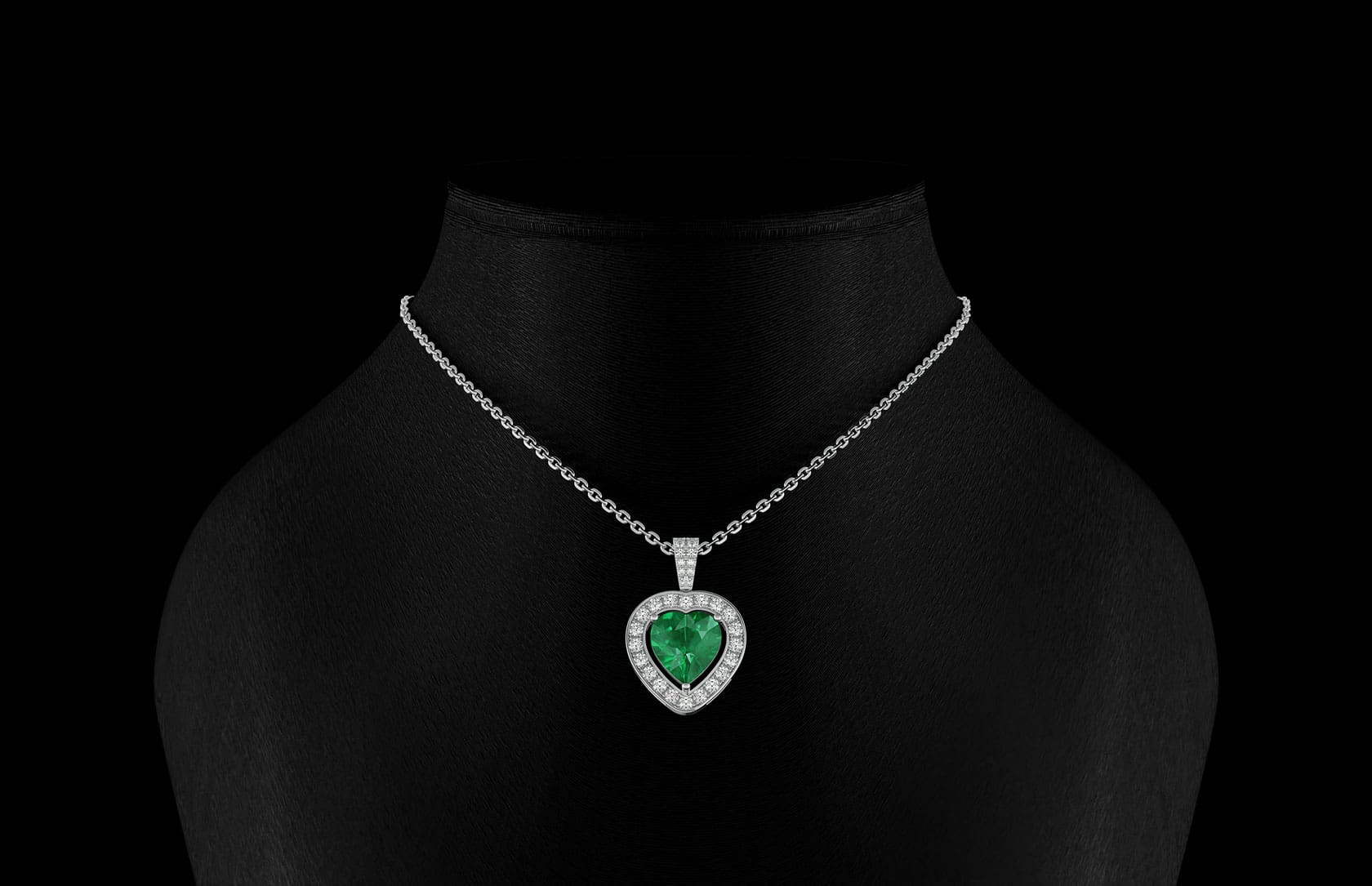


Gilson Emerald
Green stones have become very popular over time and emerald is one of the most valuable natural stones that mankind has ever been able to find. There are many alternatives with different sizes, prices and raw materials on the market, but here, we are going to look at the “Gilson Emerald”.
What is a Gilson Emerald? What is the difference between a Gilson Emerald and a natural emerald? Why should you and why should you not buy a Gilson Emerald?
The first synthetic example of a Gilson Emerald was made by Carroll Chatham in 1938. A common method for growing emeralds was the Verneville method, which resulted in emeralds with bubbles and curved lines. This method was common until the French potter and engineer – Pierre Gilson – succeeded in producing synthetic emeralds in the early 1990s.
Although Mr. Gilson’s factory no longer exists, the raw material of Gilson’s products is still used in the trade and in petrological laboratories.
Unlike diamonds, the brilliance and purity of an emerald are not the most important factors in its valuation, but rather its color spectrum. Gilson emeralds are very similar to natural emeralds in terms of chemical structure and appearance.
Although emeralds are mined from the ground, there are always impurities in the stone in the form of small patterns. However, the presence of impurities does not reduce the value of this beautiful stone and is one of its main characteristics. Examining impurities is the easiest way to distinguish natural emeralds from synthetic emeralds. Gilson emeralds have no impurities. Regardless of where the stone came from and how it was formed, some customers are looking for pure stones and believe that Gilson emeralds are more beautiful. Of course, it cannot be ignored that the price of Gilson emeralds is significantly cheaper than natural emeralds.